
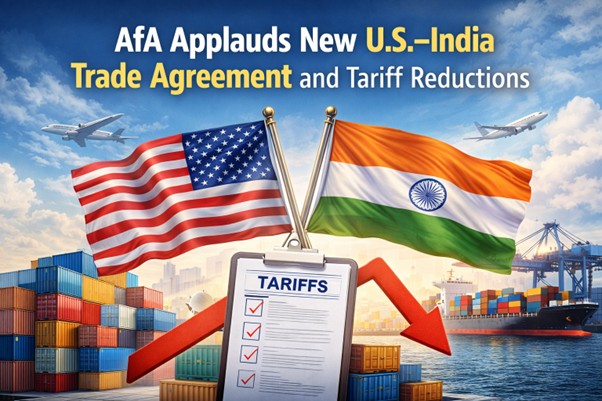
The Airforwarders Association (AfA) has expressed strong support for a recently announced trade agreement between the United States and India, highlighting its potential to strengthen global commerce and improve cost predictability across supply chains. rtake laborous sed physical exercise obtain some give you complete advantages from sed it accont of the system explain to you how all this mistaken idea of denouncing pleasure and praising was complete account.
Under the framework of the deal, both countries have agreed to significantly reduce tariffs on a wide range of traded goods. This shift marks a major step toward easing barriers that have hindered cross-border trade, particularly in sectors crucial to air cargo and international logistics.
AfA leadership emphasised that lower duties will help facilitate smoother trade flows between two of the world’s largest economies. They pointed out that reduced tariffs are likely to cut costs for businesses and consumers, improve market access for exporters, and create a more stable environment for air forwarders, airlines, and shippers that depend on predictable pricing and capacity planning.
Supporting Supply Chains and Economic Ties
In official statements, the AfA noted that robust commercial links already exist between the United States and India, with air cargo playing a central role in moving high-value and time-sensitive goods such as electronics, pharmaceuticals, textiles, and perishable products.
The association characterised the tariff reductions as a positive development that can help restore freight volumes and market confidence, particularly after periods of disruption caused by steep tariffs in the preceding year.
The Case for Policy Stability
AfA leaders also reiterated the importance of clear, consistent trade policies. They stated that unpredictable tariff adjustments have historically made it difficult for forwarders and their customers to forecast costs, set competitive pricing, and make long-term operational decisions.
According to AfA, achieving a more reliable regulatory and trade policy framework is essential to fortifying supply chain resilience — not just between the U.S. and India, but within broader global logistics networks.
Looking ahead, the association intends to maintain active engagement with policymakers on issues that affect international freight movement. Senior AfA representatives are scheduled to present their views at the AirCargo Conference in Florida in mid-February, where they will share detailed polling results from members on how tariff policies have impacted their businesses.
Leave Your Reply